
You may not even feel stressed anymore.
Think about the stay-at-home mom managing a household, children, schedules and everyone else’s needs. The high-level CEO carrying the responsibility of an entire company.
The manager who was just handed three additional roles.
The teacher who spends all day caring for everyone else.
Sometimes we become so accustomed to living under pressure that stress begins to feel normal. But your body may still be responding to it.
And when we are trying to change your metabolism, eating patterns, habits and overall wellness, we want to understand as much about you as possible.
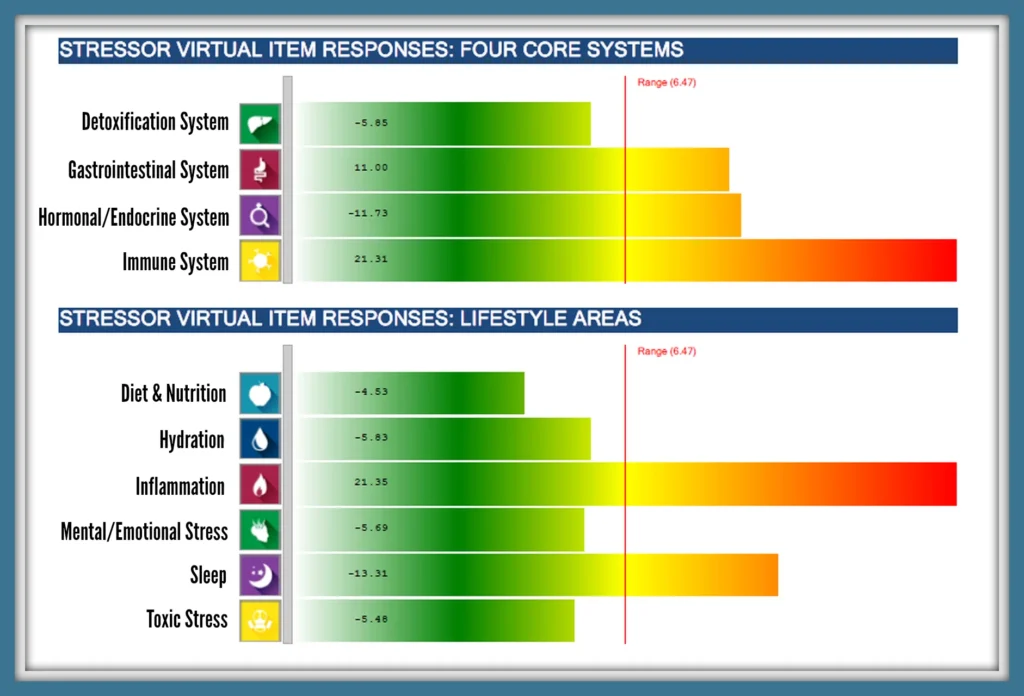
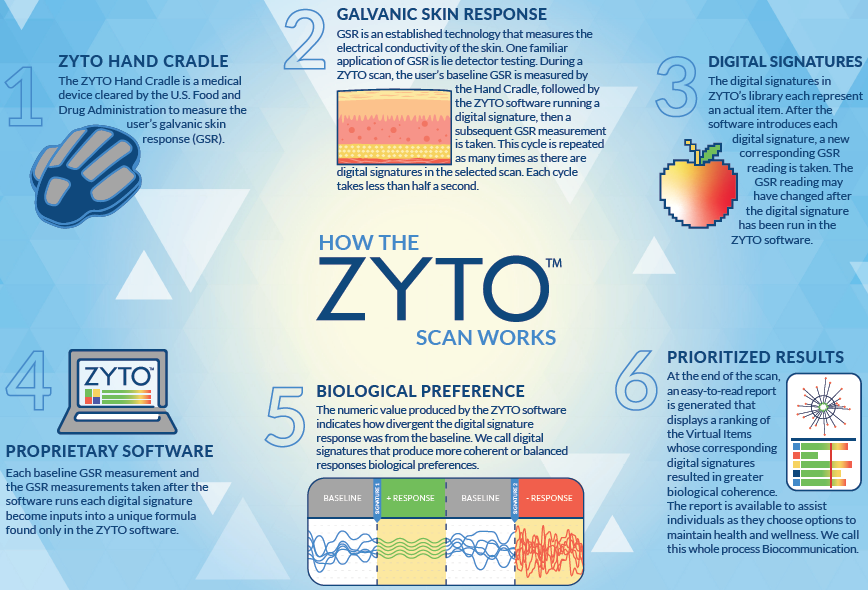
ZYTO uses a handheld device called the ZYTO Hand Cradle to record galvanic skin response, or GSR.
GSR measures subtle changes in the electrical conductivity of the skin associated with sweat-gland activity and the autonomic nervous system.
Research published through PubMed describes electrodermal activity/GSR as an objective indicator of autonomic nervous-system arousal and notes that it can reflect changes associated with emotional and physiological stress responses.
In other words:
YOUR SKIN CAN REFLECT HOW YOUR NERVOUS SYSTEM IS RESPONDING.
GSR technology has been studied for decades and has also historically been used as one physiological measurement in applications such as biofeedback and polygraph testing.
ZYTO’s Hand Cradle is an FDA-cleared Class II device for recording galvanic skin response. 1
It is important to understand what that means:
ZYTO does NOT diagnose disease.
It does not diagnose adrenal dysfunction.
It does not measure cortisol, hormones, organs or vitamin deficiencies.
And it does not replace appropriate medical testing.
Instead, we use the information as one additional wellness tool to help us better understand patterns in your body’s responses and personalize your program.
Intermittent fasting can be a wonderful wellness and nutrition strategy.
BUT IT IS NOT AUTOMATICALLY THE RIGHT STRATEGY FOR EVERY PERSON.
Research shows that fasting itself creates measurable neuroendocrine and metabolic responses in the body.
Studies involving women—including research in postmenopausal women—have demonstrated changes in parts of the neuroendocrine stress-response system during fasting.
That does not mean fasting is bad.
It means we need to stop assuming that because something works beautifully for one person, it is automatically appropriate for everyone.
Especially when someone may already be carrying a significant physiological or emotional stress load. So rather than simply telling every client:
“YOU SHOULD INTERMITTENT FAST.”
We ask a much better question:
“DOES FASTING MAKE SENSE FOR YOU RIGHT NOW?”
That distinction matters.
Imagine two women:
Same age.
Same weight.
Both want to lose 30 pounds.
Both may even be going through menopause.
But one is sleeping eight hours, exercising regularly and living a relatively predictable life.
The other is caring for aging parents, managing teenagers, sleeping five hours, working full-time and constantly feeling like she is running behind.
SHOULD THEY AUTOMATICALLY RECEIVE THE EXACT SAME PLAN? We don’t believe they should.
Their bodies may be experiencing completely different environments.
That is why personalization matters.
We don’t build your program from a ZYTO scan alone.
We look at the whole person.
Your ZYTO wellness information is considered alongside things such as:
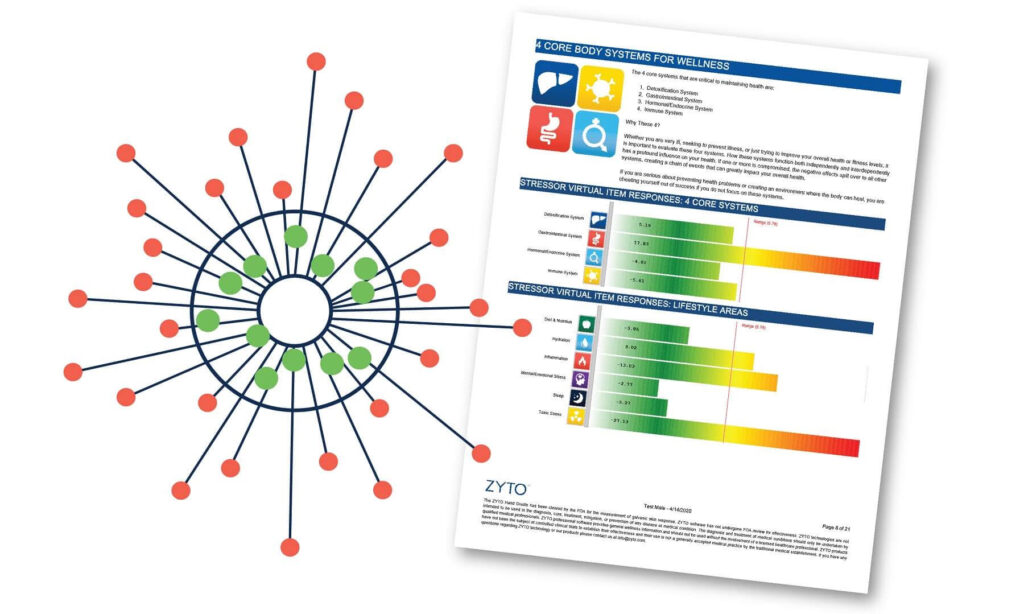
From there, ZYTO can add another layer of wellness information to guide conversations about your individualized program.
We may use those insights when considering:
Whether fasting should even be considered
At Carrie’s Weight & Wellness, we don’t believe successful weight loss comes from handing everyone the same sheet of paper.
WE LISTEN TO YOUR STORY.
Because the goal isn’t simply finding another diet.
The goal is understanding what your body and your lifestyle can realistically support so we can help you build something sustainable.
Published research indexed in PubMed describes galvanic skin response/electrodermal activity as a physiological indicator of sympathetic nervous-system and autonomic arousal.
Research has also demonstrated that emotional stimuli can influence skin sympathetic activity and galvanic skin response.
5
Studies of fasting, including research involving postmenopausal women, demonstrate that fasting can produce measurable neuroendocrine responses—reinforcing why nutritional strategies should be considered in the context of the individual rather than universally prescribed.
Sources available through PubMed: